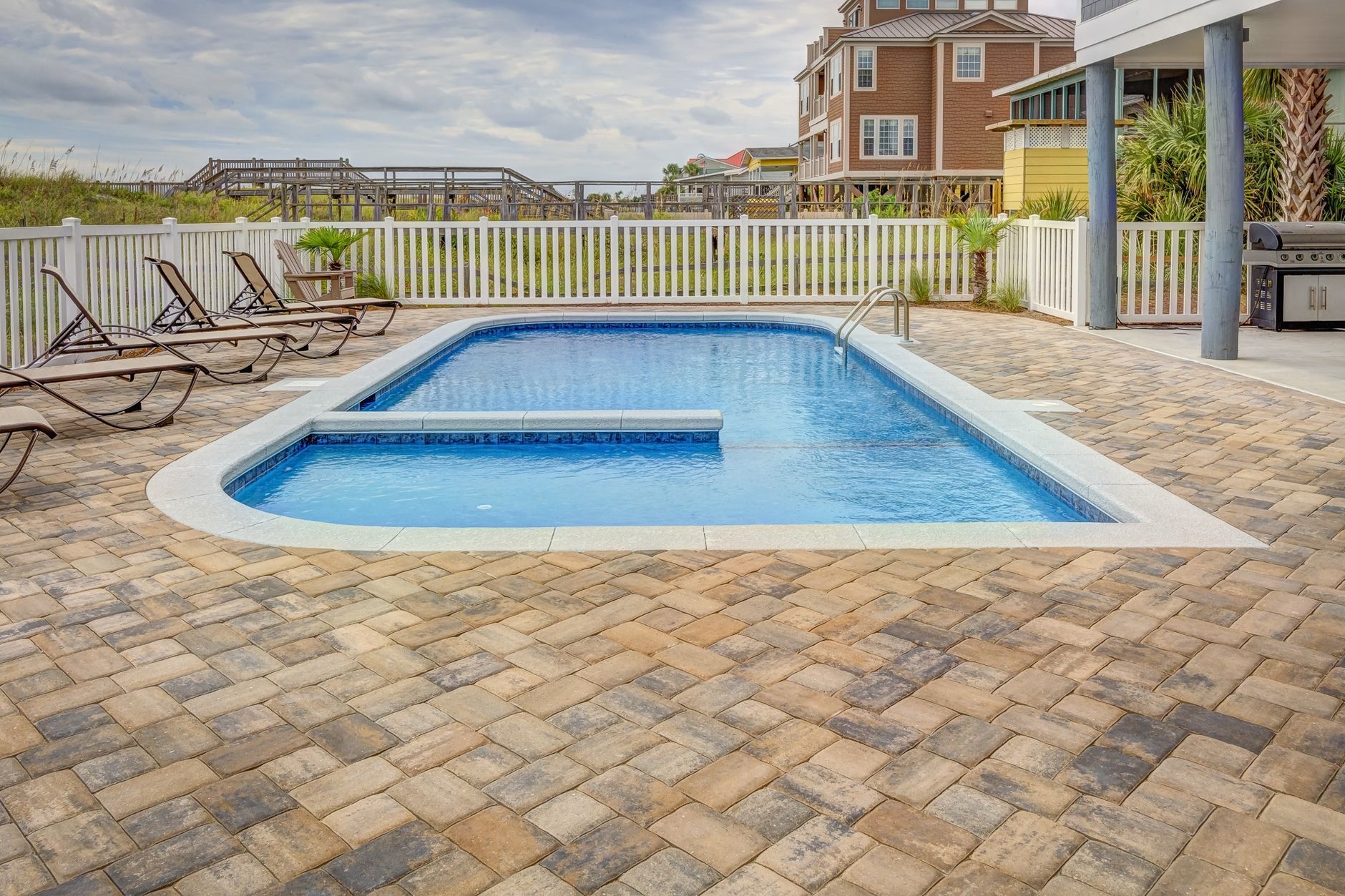
You topped off the pool twice this week and the water is still sitting an inch below the skimmer. Your last utility bill jumped for no reason you can point to. If that sounds familiar, you are probably not imagining it, and you are not alone in searching for pool leak detection near Port St Lucie FL at ten o'clock at night with a flashlight in hand.
Here is what you will get from this guide: a simple test you can run today to confirm whether you actually have a leak, the warning signs that point to one even before the water level tells you, where leaks tend to show up in local pools, and what to expect when you call a professional in for pool leak detection near Port St Lucie FL.
Is it a leak, or just evaporation?
Every pool loses some water to evaporation, especially here. Between our summer heat, low humidity spells, and wind off the coast, a quarter to half an inch a day is normal and nothing to worry about. The trouble starts when the loss is faster than that, or when it keeps up even during cooler, calmer weather when evaporation should slow down.
A good rule of thumb: if you are adding more than about an inch of water a week and your pool is not seeing extra swimmers, a heat wave, or a run of dry, windy days, something other than evaporation is likely at play.
The bucket test: how to check it yourself
Before you call anyone, this five-minute test will tell you a lot:
- Fill a bucket with pool water so the water line inside the bucket matches the pool's water line outside it.
- Set the bucket on a step in the shallow end so it floats partially in the water, or weigh it down slightly so it stays put.
- Mark both water lines, the bucket's and the pool's, with tape or a marker.
- Turn off the pump and wait 24 hours, then compare the two lines.
If the pool's water line has dropped noticeably more than the bucket's, evaporation is not your problem. Water inside the bucket only loses water to evaporation, so any extra drop in the pool itself points to a leak somewhere in the shell, plumbing, or equipment.
Signs pointing to a leak beyond the water level
Water loss is the obvious clue, but your pool usually gives other hints first. Watch for:
- Cracked, lifting, or separating pool deck or patio pavers, especially near the shell
- Soggy or unusually green patches of lawn near the pool equipment or shell
- Air bubbling from the returns or a pump that seems to be working harder than usual
- Cracks or gaps forming at tile lines, skimmer fittings, or light niches
- A steadily rising water bill with no other explanation
Any one of these on its own is not proof, but two or more together are a strong signal it is time for a real inspection rather than more guessing.

Where pools around Port St Lucie tend to leak
After years of humid summers, shifting sandy soil, and plenty of sun exposure, certain spots wear out faster than others. The usual suspects are:
- Skimmer and return fittings: The plastic and plaster seal around these can crack as the pool settles over time.
- Underground plumbing: PVC joints can separate or crack, often showing up as a wet spot in the yard far from the pool itself.
- Light niches and main drains: Gaskets here degrade and are easy to overlook without the right tools.
- Structural cracks: Settling ground can crack the shell itself, particularly in older gunite pools.
- Equipment pad: Pump seals, unions, and valve gaskets are common, lower-cost leak points worth ruling out first.
A technician doing pool leak detection near Port St Lucie FL usually checks the equipment pad first since it is the easiest and cheapest fix, then works outward to the shell and plumbing if that comes back clean.
Why waiting on a leak costs more later
A small leak rarely stays small. Water finding its way under the deck or shell can erode the soil supporting it, which is how a minor crack turns into a settling, cracked patio or a structural repair. A leak at the equipment pad can also starve your pump of water, leading to a burned-out motor. What starts as a fixable leak can turn into one of the more expensive repairs a pool owner faces if it goes unaddressed through a full Florida summer of heavy rain and heat.
Regular maintenance visits like the ones covered in our pool cleaning service in Port St Lucie often catch a slow leak early, since a technician who sees your pool every week notices a dropping water level long before most homeowners do. If your pump has already stopped running or the water is dropping fast, our guide to emergency pool repair in Port St Lucie covers what to do right now.
Give us a call, we serve Port St Lucie and the surrounding Treasure Coast.
Call (772) 555-0188 — free quotes, no obligation.
What happens when a pro comes out for leak detection
Professional pool leak detection near Port St Lucie FL usually starts with the same bucket-style water test to confirm a real leak exists, then narrows down the location using dye testing at suspect fittings, a check of pressure in the plumbing lines, and a close inspection of the shell and equipment pad. The goal is to find the actual source before any repair work starts, rather than guessing and patching the wrong spot.
Once the leak is located, you get a clear explanation of what failed and why, along with your options for fixing it. Some fixes, like a pump seal or a skimmer gasket, are quick. Others, like a structural crack or a plumbing break under the deck, take more planning. Either way, you should know exactly what you are dealing with before anyone starts work. For a broader look at what drives repair pricing in general, our pool service cost guide for Port St Lucie covers how technicians scope and price a job.

Frequently Asked Questions
How do I know if my pool has a leak or is just evaporating?
Run the bucket test: mark the water level in a bucket sitting in the pool and the pool's own water level, turn off the pump, and compare the two after 24 hours. If the pool dropped noticeably more than the bucket, you likely have a leak rather than normal evaporation.
How much water loss per day is normal in Port St Lucie?
A quarter to half an inch a day from evaporation is typical in our climate. Losing more than about an inch a week without extra swimmers, a heat wave, or dry windy weather to explain it is a sign something else is going on.
Besides the water level, what other signs point to a leak?
Cracked or shifting deck pavers, soggy patches of lawn near the equipment pad, air bubbling from the returns, cracks near tile lines or skimmer fittings, and an unexplained jump in your water bill are all signs worth taking seriously.
Is a small leak really worth fixing right away?
Yes. A small leak rarely stays small. It can erode the soil under your deck or shell, starve your pump of water and burn out the motor, or simply keep costing you in refills and higher bills the longer it runs.
What happens when a pro comes out for pool leak detection near Port St Lucie, FL?
A technician confirms the leak with a water test, then narrows down the source using dye testing, a check of plumbing pressure, and a close look at the shell and equipment pad. You get a clear explanation of the cause and your repair options before any work begins.
A leak does not fix itself, and every day it runs is more water, more cost, and more risk to your deck and equipment. Get a straightforward answer today.
Call (772) 555-0188 Today